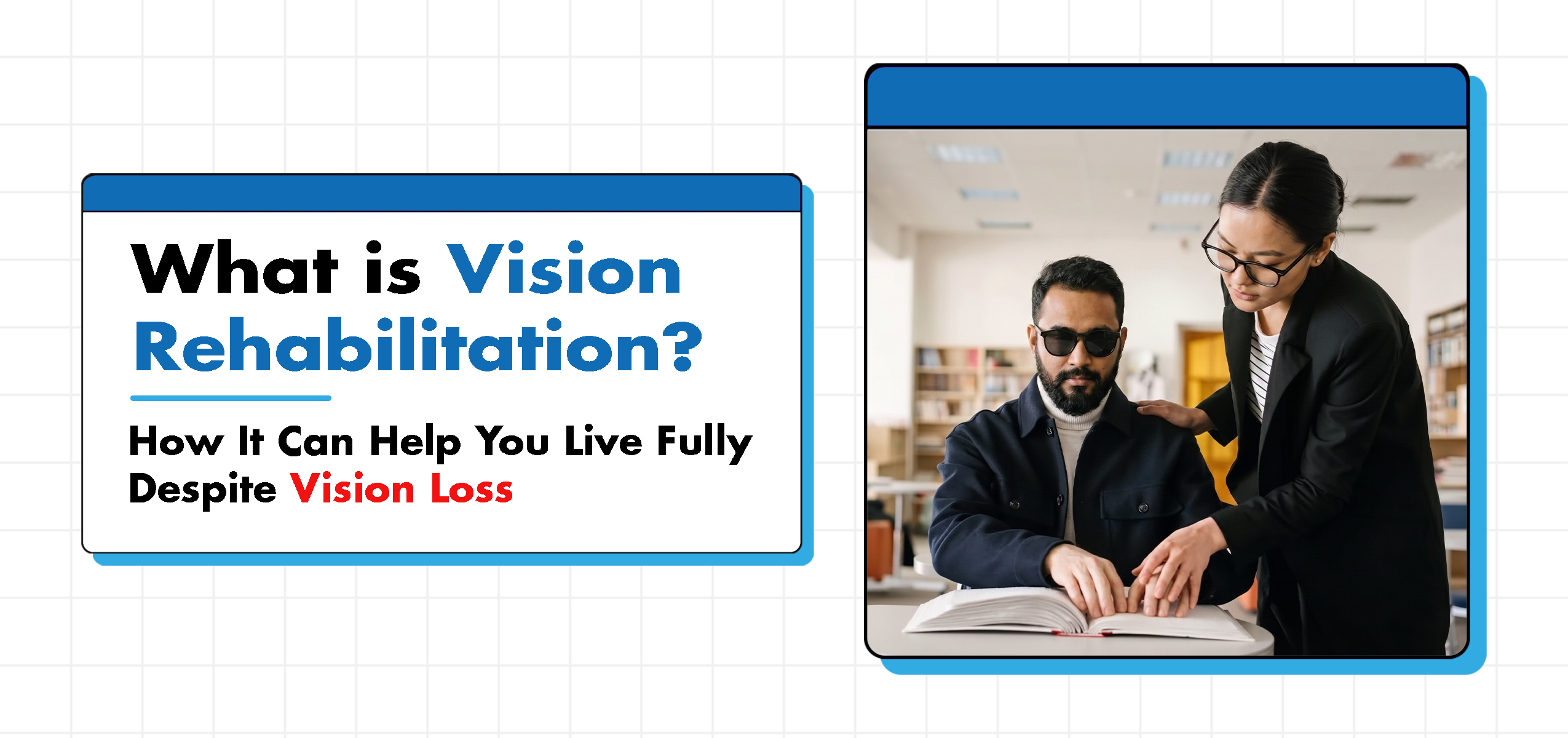
What Is Vision Rehabilitation? How It Can Help You Live Fully Despite Vision Loss
Introduction
Losing vision — whether partially or fully — can feel like losing a piece of one’s identity. Everyday tasks suddenly become harder: reading, recognizing faces, navigating one’s surroundings, even cooking or using a smartphone. At Drishti Eye Care System, we believe that vision loss doesn’t have to mean loss of independence. That’s where vision rehabilitation comes in.
In this article, you’ll learn:
- What vision rehabilitation means and who it’s for
- Common causes and symptoms that suggest you might need it
- How the rehabilitation process works at an eye hospital
- Devices, therapies, and assistive strategies used
- What you can expect in terms of benefits
- When and how to seek vision rehab support
- Frequently asked questions (FAQs)
By the end, you’ll have a clear, hopeful roadmap for how you or a loved one can reclaim confidence and function — even with visual impairment.
What Does “Vision Rehabilitation” Mean?
 Vision Rehabilitation Defined
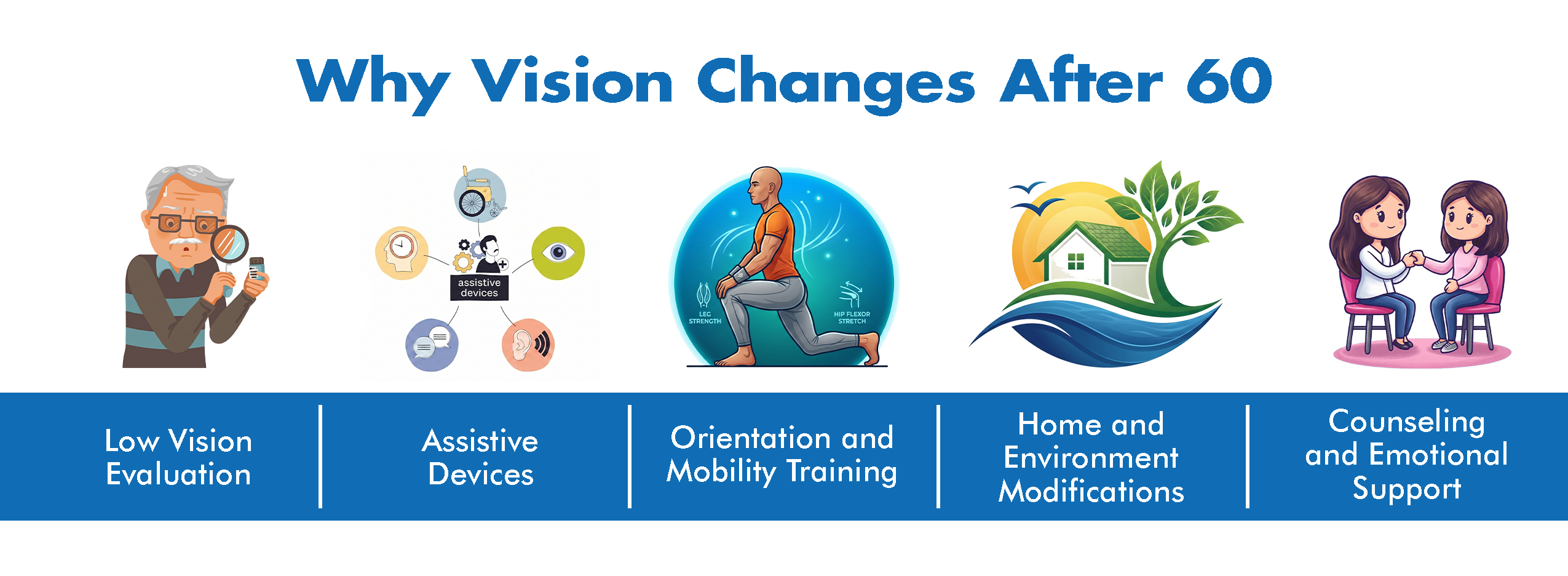
Vision rehabilitation (sometimes called “vision rehab” or “low vision rehabilitation”) is a specialized medical and therapeutic process designed to help people with vision impairment make the most of their remaining sight. Unlike glasses, surgery, or medication — which aim to correct or restore vision — rehabilitation focuses on adapting, compensating, training, and using assistive technologies to improve daily functioning and independence. nei.nih.gov+3Wikipedia+3aoa.org+3
In simpler terms: if vision can’t be fully restored, vision rehabilitation helps you live as fully and safely as possible with what vision you still have.
Who Can Benefit from Vision Rehabilitation?
Vision rehab is meant for anyone whose vision loss can’t be adequately corrected through conventional means (glasses, surgery, medication). Some common categories include:
- Low vision — significant visual impairment not correctable to “normal” levels
- Partial blindness or severe visual field loss
- Damage from disease or injury — for example: retinal disorders, glaucoma, diabetic retinopathy, age-related macular degeneration, optic nerve damage, neurological injuries, stroke, or brain injury
- Congenital visual impairment
- Progressive eye conditions — where vision gradually declines
According to eye health authorities, vision rehabilitation is now considered a standard of care for many people living with vision impairment. aoa.org+2American Academy of Ophthalmology+2
Why Vision Rehabilitation Matters: Causes, Symptoms & Challenges
Common Causes of Irreversible Vision Loss
Some eye conditions or events lead to vision loss that can’t be fully reversed. These include:
- Macular degeneration (age-related)
- Diabetic retinopathy / diabetic macular edema
- Glaucoma (advanced stages)
- Retinitis pigmentosa and other retinal dystrophies
- Optic nerve disorders (for example, optic neuropathy)
- Trauma or brain injury affecting visual pathways
- Stroke or neurological damage involving the visual centers
- Inherited or congenital vision disorders
In these cases, although medical or surgical care may slow or prevent further damage, vision rehabilitation becomes essential to help the person adapt.
Symptoms & Warning Signs That Vision Rehabilitation May Be Needed
You might consider vision rehabilitation if you find:
- Difficulty reading regular print (newspaper, books, labels)
- Trouble recognizing faces or reading expressions
- Problems navigating in dim light or in unfamiliar places
- Frequent accidents, tripping, bumping into objects
- Glare sensitivity or poor contrast perception
- Trouble using computers, phones, or digital devices
Increased dependence on others for everyday tasks
- Emotional distress, anxiety, or depression tied to vision loss
These symptoms often point to functional rather than purely optical deficits. Even if some vision remains, performance and quality of life may still be significantly affected.
How Vision Rehabilitation Works: The Process & Team
Step 1: Comprehensive Evaluation
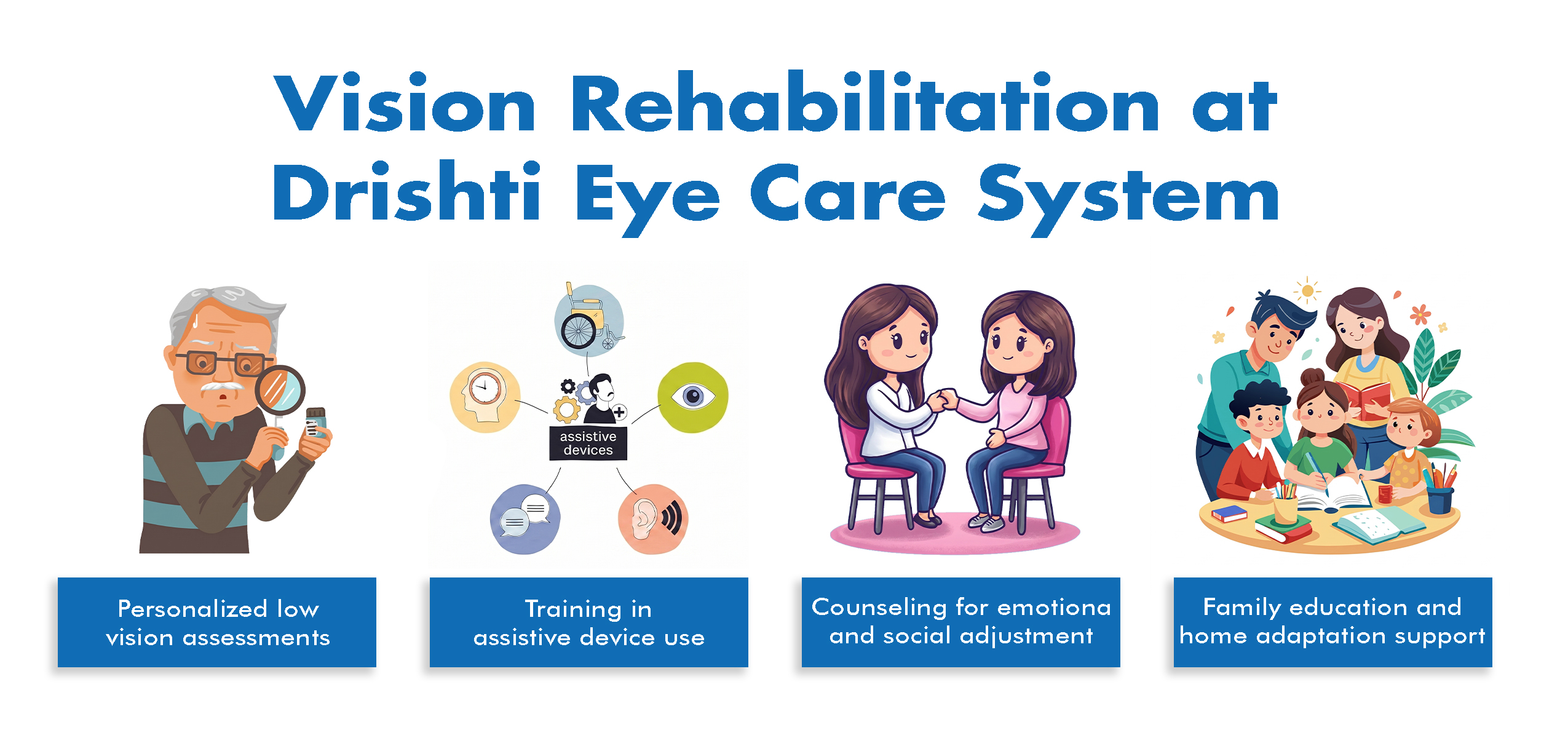
A vision rehabilitation journey begins with a detailed assessment, often called a low vision evaluation or functional vision assessment. The aim is to identify:
- The level and nature of visual impairment (acuity, field, contrast sensitivity, glare)
- How vision loss impacts tasks (reading, mobility, daily living)
- The person’s goals, preferences, and lifestyle needs
- Cognitive, physical, or environmental factors that might affect rehabilitation
This evaluation is often performed by ophthalmologists, optometrists, or low vision specialists. nei.nih.gov+3aoa.org+3aoa.org+3
Step 2: Goal Setting & Rehabilitation Plan
Based on the assessment, the rehabilitation team and the patient (and sometimes caregivers) define realistic, meaningful goals. Examples:
- Read medication labels
- Travel safely indoors and outdoors
- Return to a hobby or leisure activity
- Work or job-related tasks
- Use digital devices
- Household tasks (cooking, cleaning)
The team then designs a personalized plan, combining optical, environmental, technological, and training solutions. aoa.org+2nei.nih.gov+2
Step 3: Interventions & Training
This is the heart of rehabilitation, involving:
Assistive Devices & Optical Aids
- Spectacle-mounted magnifiers or microscopes
- Handheld or stand magnifiers
- Telescopic lenses for distance tasks
- Electronic magnifiers (video magnifiers, closed-circuit systems)
- Screen readers, text-to-speech software, digital accessibility tools
- Contrast-enhancement, filters, lighting modifications
- Large-print materials, talking devices, tactile cues
These devices help amplify or reformat visual information so that tasks become feasible again. aoa.org+2aoa.org+2
Orientation, Mobility & Navigation Training
Many people with vision impairment need training to move safely:
- Use of a white cane or mobility aids
- Orientation training (learning mental maps, landmarks)
- Safe navigation indoors and outdoors
- Spatial awareness and obstacle detection
This typically involves a specialist called an orientation & mobility (O&M) instructor. nei.nih.gov+3aoa.org+3American Academy of Ophthalmology+3
Daily Living & Adaptive Skills
Therapists train in adapting everyday tasks:
- Cooking with contrast cues
- Labeling items with tactile or large-print tags
- Organizing household layouts for ease
- Eating, grooming, cleaning with safe strategies
- Using adaptive techniques for reading, writing, and computer use
Often occupational therapists or certified vision rehabilitation therapists (VRTs) lead this training. acvrep.org+2wmich.edu+2
Psychological & Social Support
Vision loss can lead to emotional stress, isolation, anxiety, and depression. Rehabilitation often includes:
- Counseling or peer support groups
- Training caregivers and family members
- Encouraging social reintegration and self-advocacy
Vocational & Educational Rehabilitation
For people wishing to return to work or study, customized training, workplace adaptations, and assistive technology support are provided. aoa.org+1
Step 4: Re-evaluation & Adjustment
Vision needs and goals may change over time. Regular follow-ups help adjust devices, strategies, or goals accordingly. The rehabilitation team monitors progress, and may re-assess vision or function at intervals. aoa.org+1
Benefits & Impact of Vision Rehabilitation
Enhanced Independence & Quality of Life
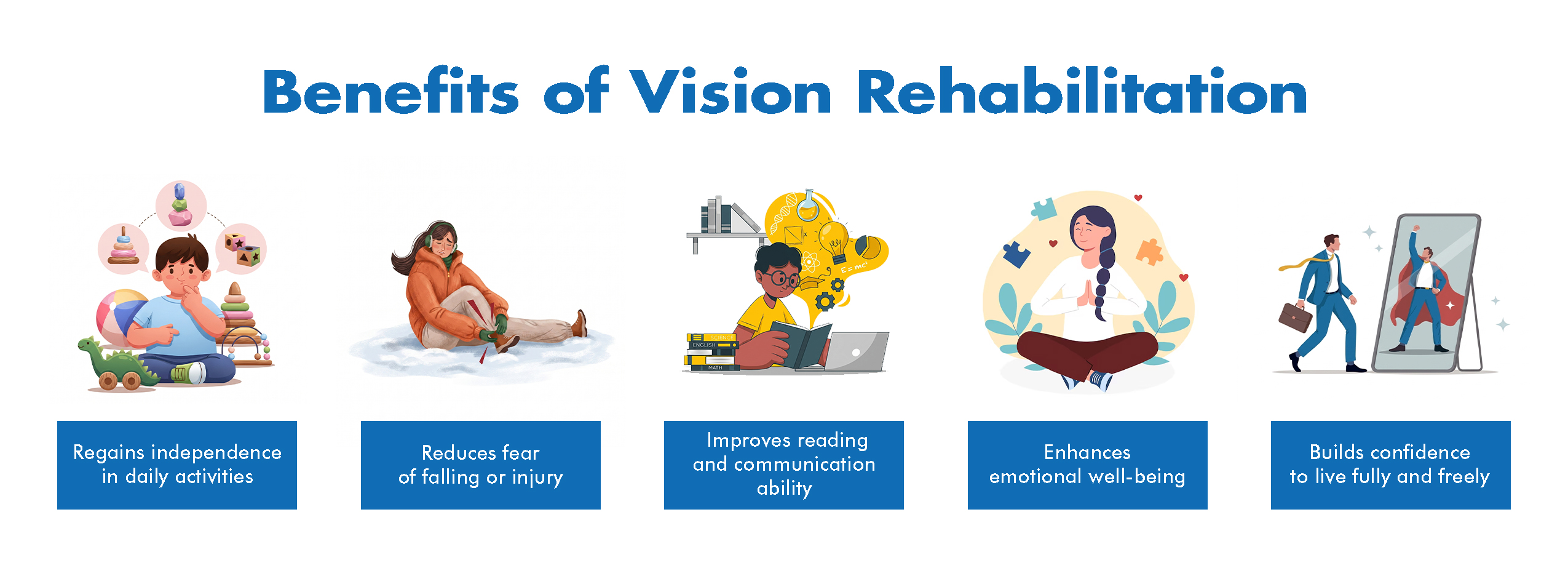
By enabling people to perform daily tasks with confidence, vision rehab restores dignity, autonomy, and participation in life. ncoa.org+2nei.nih.gov+2
Improved Safety & Reduced Risk of Accidents
Proper training and adaptation reduce falls, mishandling of tools or medications, accidents at home, and collisions while moving. ncoa.org+1
Better Emotional & Psychological Well-being
Rehabilitation helps mitigate depression, anxiety, and social withdrawal by restoring control and engagement. ncoa.org+2nei.nih.gov+2
Maximizing Remaining Vision
Assistive strategies make the most of remaining vision, helping patients read, navigate, and engage more effectively. Even small improvements in usability can make a big difference. nei.nih.gov+2aoa.org+2
Economic & Vocational Returns
People may return to work, manage finances, or contribute to household responsibilities, thereby reducing long-term dependency burdens.
When to Seek Vision Rehabilitation
It’s often best to start as early as possible — not after total loss of function:
- As soon as vision loss stabilizes and conventional treatments have been exhausted
- When you find yourself struggling more with daily tasks
- When you feel frustration, anxiety or declining function
- After diagnosis of an eye disease that is likely to reduce vision
- When a family member or caregiver notices decline in safety or independence
If you or someone you know is experiencing the signs or challenges listed above, it’s time to consult a vision rehabilitation specialist at Drishti Eye Care System.
Conclusion & Call to Action
Vision loss is a life-altering challenge — but it doesn’t have to define your life. With vision rehabilitation, you can regain independence, confidence, and a path forward. At Drishti Eye Care System, we combine medical care, assistive technology, compassionate therapy, and ongoing support to help you live well, even with visual impairment.
If you or a loved one are experiencing difficulties with vision, or you’ve been diagnosed with a condition that might lead to vision loss, let us help you. Book an appointment with our low vision or rehabilitation specialist. Together, we’ll design a path tailored to your life, your goals, and your vision.
📞 Call: +977-9801445222
🌐 Website: drishtieye.org