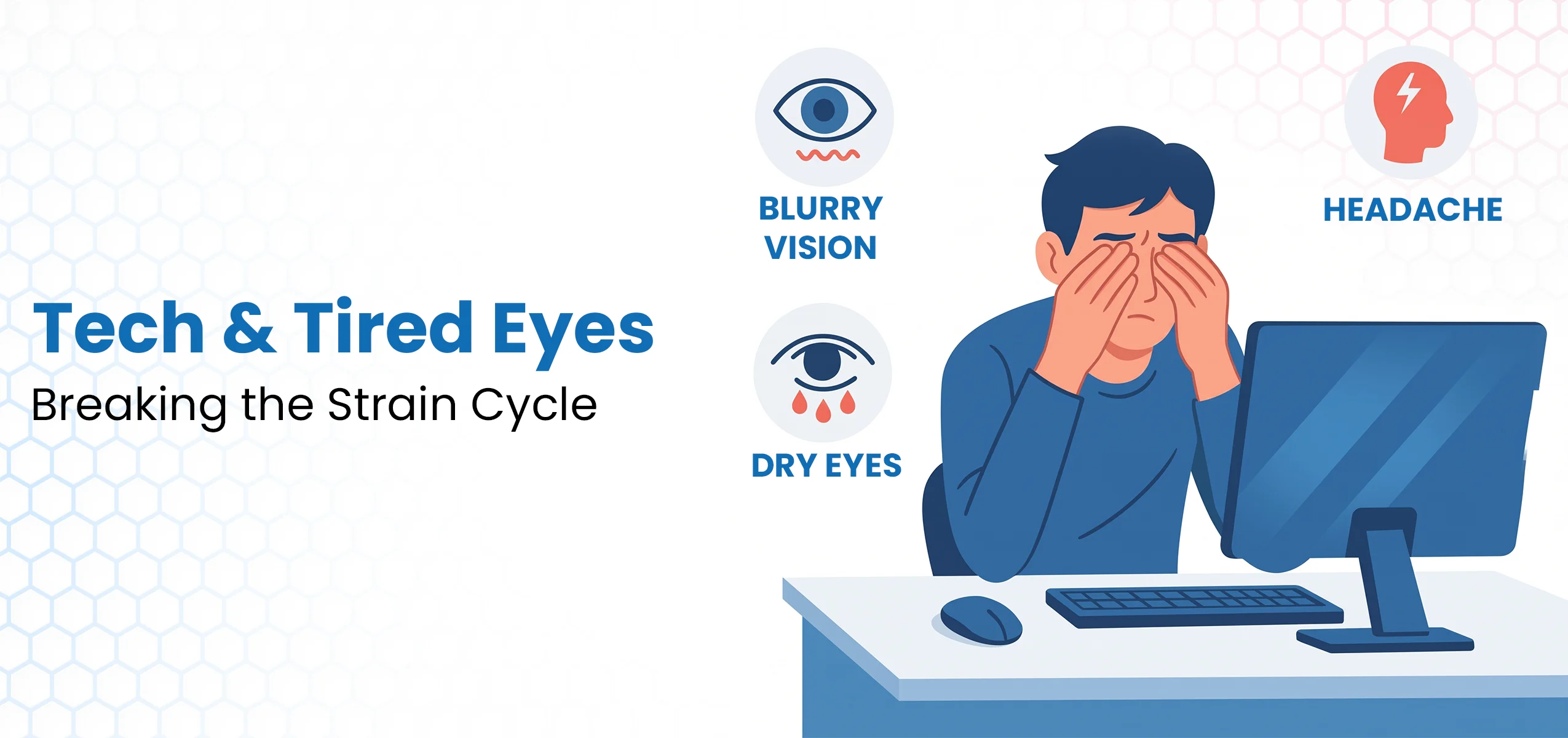
“Tech and Tired Eyes: Breaking the Strain Cycle”
In today’s fast-paced, tech driven world, staring at screens has become a part of daily life- whether it’s for work, socializing, or entertainment. But with extended screen time comes a growing concern: Digital Eye Strain, also known as Computer Vision Syndrome, is a condition resulting from prolonged use of computers, tablets, e-readers, and smartphones. It is characterized by group of eye and vision-related problems that arise due to overexposure to screens.
Specific Conditions Related to Digital Eye Strain:
- Dry Eyes: Reduced blinking leads to decreased tear production.
- Computer Vision Syndrome (CVS): A range of symptoms, including blurred vision and eye strain, associated with prolonged screen use.
- Myopia Progression: Prolonged screen use may contribute to nearsightedness in kids/younger individuals.
- Postural Strain: Poor ergonomics while using devices can cause neck and back discomfort, linked to visual strain.
Causes:
- Prolonged Screen Time: Continuous focus on digital screens without breaks.
- Improper Viewing Distance: Holding screens too close or too far from the eyes.
- Poor Lighting: Excessive glare or inadequate ambient lighting.
- Reduced Blinking Rate: Decreased blinking while concentrating on screens.
- Screen Brightness and Contrast: Improper settings that strain the eyes.
- Poor Posture: Ergonomic issues leading to physical and visual strain.
Symptoms and Signs:
- Eye fatigue
- Blurred or double vision
- Dry, red, or irritated eyes
- Headaches
- Neck, shoulder, or back pain
- Difficulty concentrating
- Increased sensitivity to light
Types of Digital Eye Strain:
- Visual Symptoms: Blurred vision, difficulty focusing, and light sensitivity.
- Ocular Symptoms: Dryness, redness, and discomfort.
- Musculoskeletal Symptoms: Physical discomfort caused by poor posture during screen use.
Treatment and Prevention:
- Follow the 20-20-20 Rule: Every 20 minutes, look at something 20 feet away for 20 seconds.
- Adjust Screen Settings: Optimize brightness, contrast, and font size.
- Use Proper Lighting: Minimize glare and ensure balanced ambient lighting.
- Maintain Ergonomic Posture: Ensure proper chair and screen height alignment.
- Use Artificial Tears: Relieve dryness and maintain eye moisture.
- Wear Blue Light Glasses: Protect eyes from prolonged exposure to blue light.
- Frequent Blinking: Make a conscious effort to blink often while using screens.
Key Takeaway:
Digital eye strain is a common issue in today’s technology-driven lifestyle., but it can be managed effectively. By adopting simple preventive measures, such as taking regular breaks, maintaining proper ergonomics, and optimizing screen settings, you can protect your eyes and improve overall comfort.