Presbyopia: Understanding Age-Related Near Vision Loss
Introduction
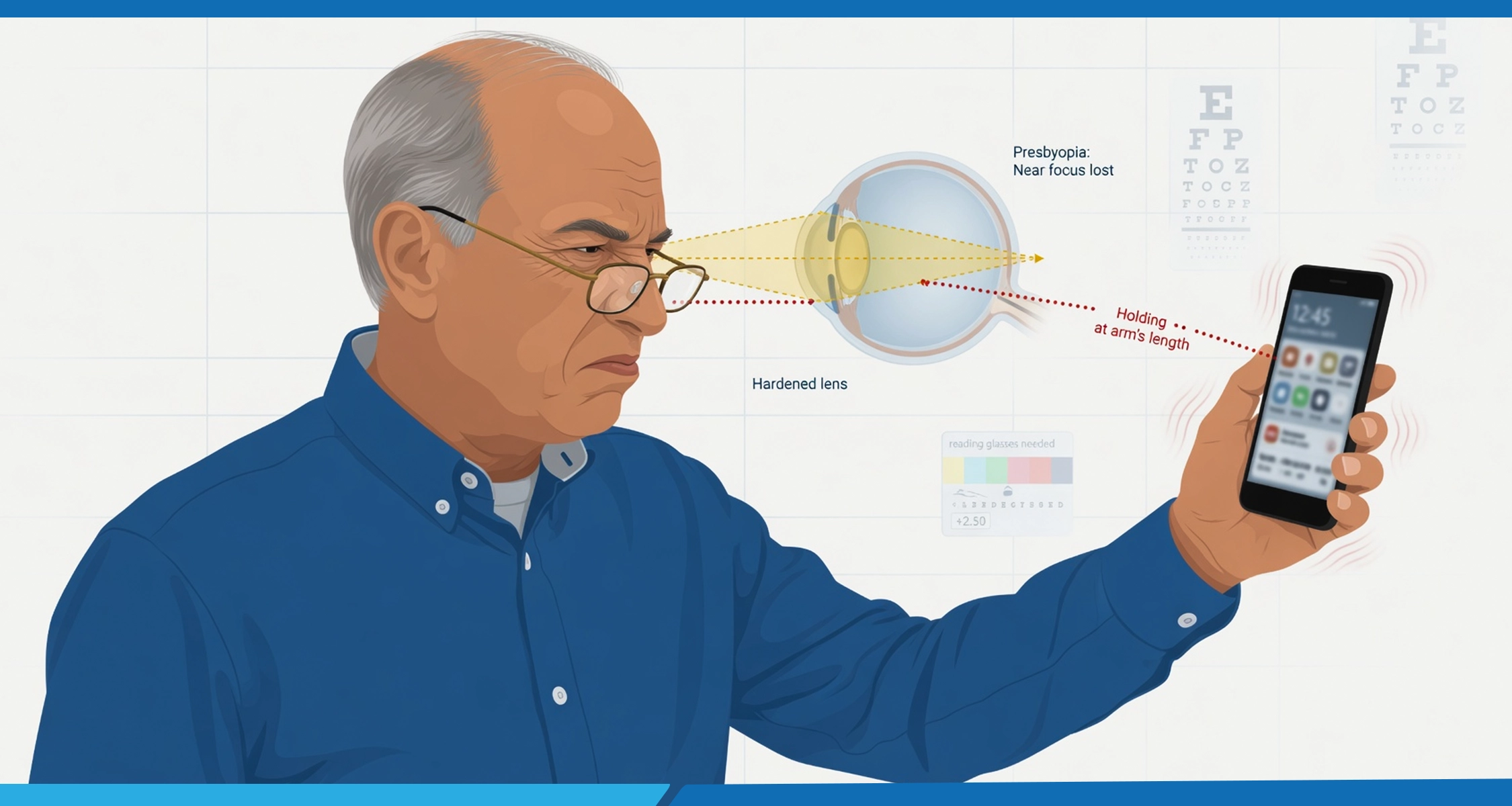
Have you started holding your phone farther away to read messages? Do restaurant menus or newspapers seem blurrier than they used to? If so, you may be experiencing presbyopia, a natural age-related change in vision.
Presbyopia is one of the most common vision conditions affecting adults over the age of 40. Unlike nearsightedness or farsightedness, presbyopia is a normal part of the aging process and happens because the eye gradually loses its ability to focus on nearby objects.
The good news is that presbyopia can be effectively managed with glasses, contact lenses, or surgical options, allowing you to continue enjoying clear vision for daily activities.
At Drishti Eye Care System, we provide comprehensive eye examinations and personalized solutions to help you see comfortably at every stage of life.
What Is Presbyopia?
Presbyopia is an age-related condition in which the eye gradually loses its ability to focus on close objects.
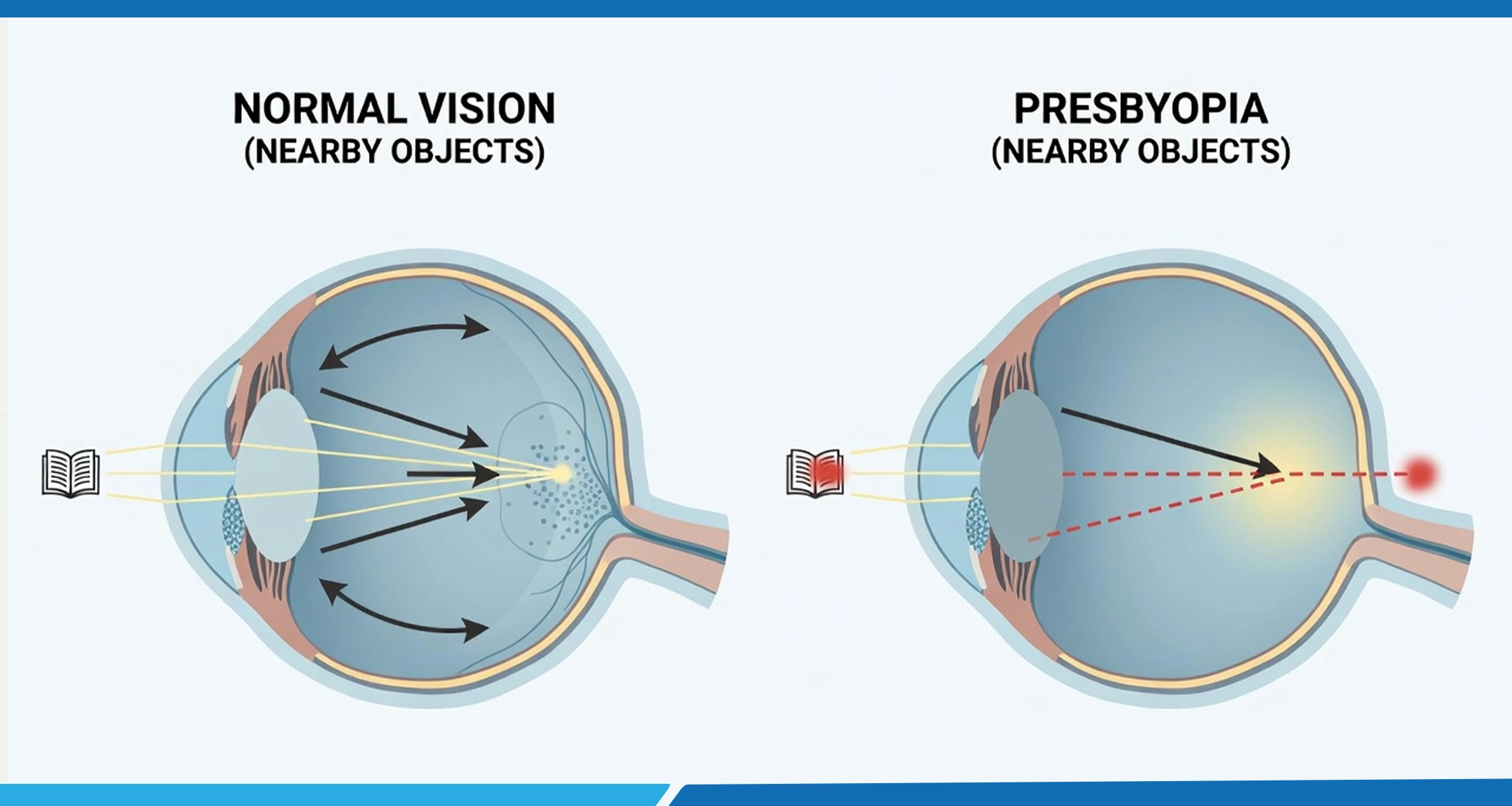
Normally, the natural lens inside the eye changes shape to focus on objects at different distances. As we age, the lens becomes less flexible, making it more difficult to focus on nearby objects.
This process is gradual and affects nearly everyone as they grow older.
How Does Presbyopia Affect Vision?
With normal vision, the eye's natural lens easily changes shape to focus on nearby objects. In presbyopia, the lens becomes stiffer and cannot accommodate as effectively, causing light from close objects to focus behind the retina instead of directly on it. As a result, reading and other close-up tasks become blurry, while distance vision may remain relatively clear.
What Causes Presbyopia?
Presbyopia is primarily caused by natural aging.
As you grow older:
- The eye's natural lens becomes thicker and less flexible.
- The muscles responsible for focusing become less efficient.
- The eye loses its ability to quickly adjust focus between near and distant objects.
Unlike refractive errors such as myopia or hyperopia, presbyopia cannot be prevented because it is part of the normal aging process.
Common Symptoms of Presbyopia
People with presbyopia may experience:
- Difficulty reading small print
- Holding books or phones farther away
- Blurred vision while reading
- Eye strain during close work
- Headaches after prolonged reading
- Difficulty reading in dim lighting
- Frequent need for brighter light when working
Symptoms often develop gradually between the ages of 40 and 45 and continue progressing until approximately age 60.
Who Is at Risk?
Although everyone eventually develops presbyopia, certain factors may make symptoms appear earlier.
Risk factors include:
- Age over 40 years
- Hyperopia (farsightedness)
- Diabetes
- Multiple sclerosis
- Cardiovascular disease
- Certain medications, including antihistamines and antidepressants
How Is Presbyopia Diagnosed?
A comprehensive eye examination can accurately diagnose presbyopia.
Your eye care professional may perform:
- Visual acuity testing
- Refraction (prescription testing)
- Near vision assessment
- Eye health evaluation
- Slit-lamp examination
- Intraocular pressure measurement
Regular eye examinations also help detect cataracts, glaucoma, diabetic eye disease, and other age-related eye conditions.
Treatment Options for Presbyopia
There are several effective ways to manage presbyopia.
Reading Glasses
Reading glasses are ideal for individuals who only require correction for near tasks such as reading or sewing.
Bifocal Lenses
Bifocals contain separate lens powers for distance and near vision within the same pair of glasses.
Progressive Lenses
Progressive lenses provide a seamless transition between distance, intermediate, and near vision without visible lines.
They are among the most popular options for managing presbyopia.
Contact Lenses
Some people prefer multifocal contact lenses or monovision contact lenses, depending on their visual needs and lifestyle.
Surgical Options
For selected patients, surgical procedures may reduce dependence on glasses.
These include:
- LASIK with monovision correction
- Refractive Lens Exchange (RLE)
- Premium intraocular lenses during cataract surgery
An eye specialist can determine whether these options are appropriate.
Tips for Living Comfortably with Presbyopia
Simple adjustments can improve your daily visual comfort.
- Use adequate lighting while reading.
- Maintain proper reading distance.
- Take regular breaks during prolonged near work.
- Keep your prescription updated.
- Follow the 20-20-20 rule when using digital devices.
- Schedule regular comprehensive eye examinations.
Can Presbyopia Be Prevented?
No.
Presbyopia is a natural part of aging and cannot be prevented.
However, regular eye examinations and timely correction can help maintain excellent visual comfort and quality of life.
How Drishti Eye Care System Can Help
At Drishti Eye Care System, we offer personalized solutions for age-related vision changes.
Our services include:
- Comprehensive eye examinations
- Accurate prescription testing
- Progressive and bifocal lens consultation
- Contact lens fitting
- Cataract evaluation
- LASIK and refractive surgery consultation
- Personalized vision correction plans
Our experienced ophthalmologists and optometrists help you choose the best treatment based on your lifestyle and visual needs.
Call to Action
If reading has become more difficult or you find yourself holding objects farther away, it may be time for a comprehensive eye examination.
Early diagnosis and the right vision correction can help you continue enjoying clear, comfortable vision for work, reading, and everyday life.
📞 Call: +977-9801445222
🌐 Website: drishtieye.org
Drishti Eye Care System — Helping You See Clearly at Every Age.