Glaucoma Symptoms & Prevention | Drishti Eye Care System
Introduction
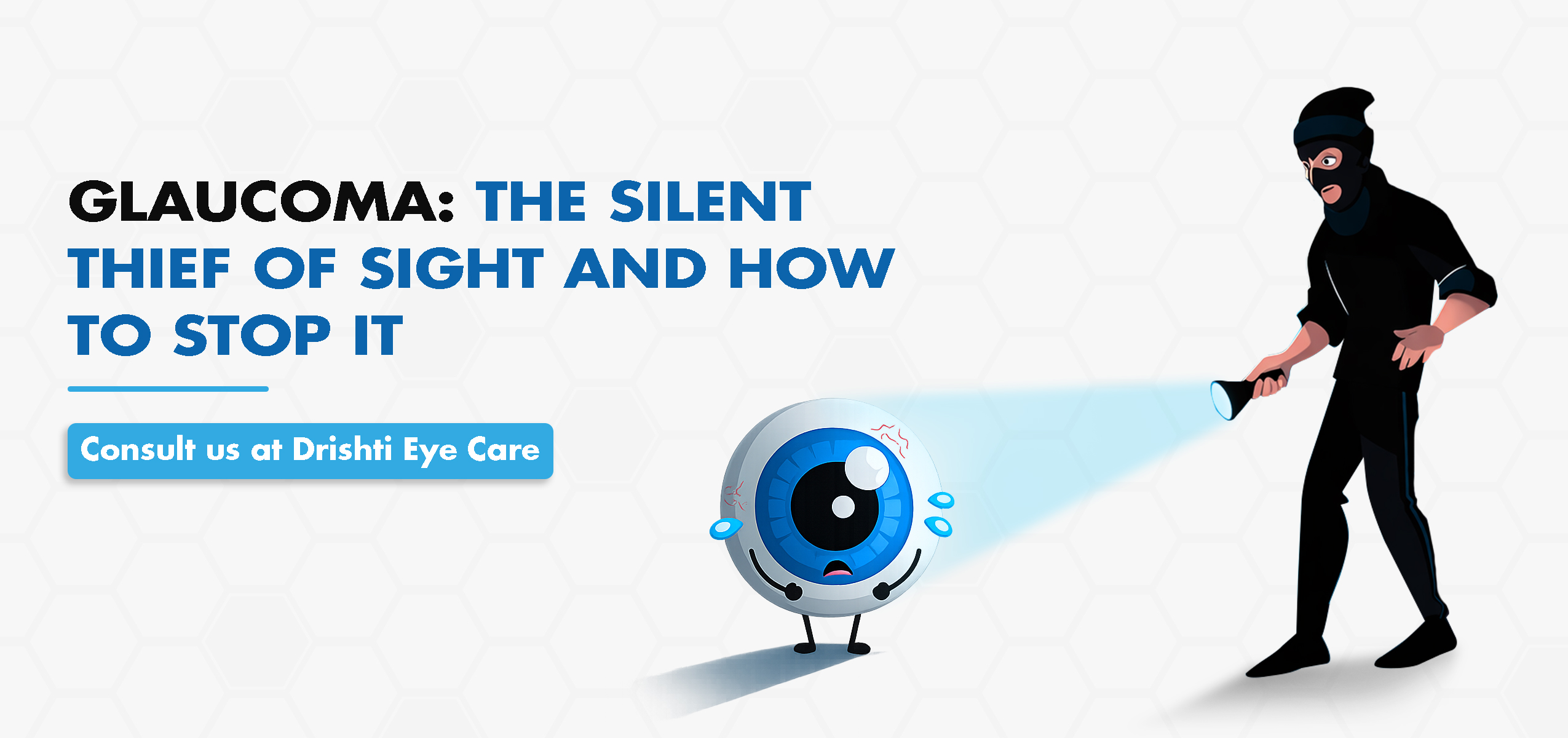
Imagine losing your vision slowly — without pain, without warning.
That’s what makes glaucoma one of the world’s leading causes of irreversible blindness.
Glaucoma damages the optic nerve — the “cable” connecting your eye to your brain — often due to increased eye pressure. The tragedy? Most people don’t realize they have it until serious vision loss occurs.
At Drishti Eye Care System, we help patients detect glaucoma early, manage it effectively, and preserve their sight for life.
What Is Glaucoma?
Glaucoma refers to a group of eye diseases that cause progressive damage to the optic nerve.
This usually happens when intraocular pressure (IOP) builds up due to poor fluid drainage in the eye.
Without treatment, the nerve fibers die — leading to gradual peripheral (side) vision loss and eventually tunnel vision.
Types of Glaucoma
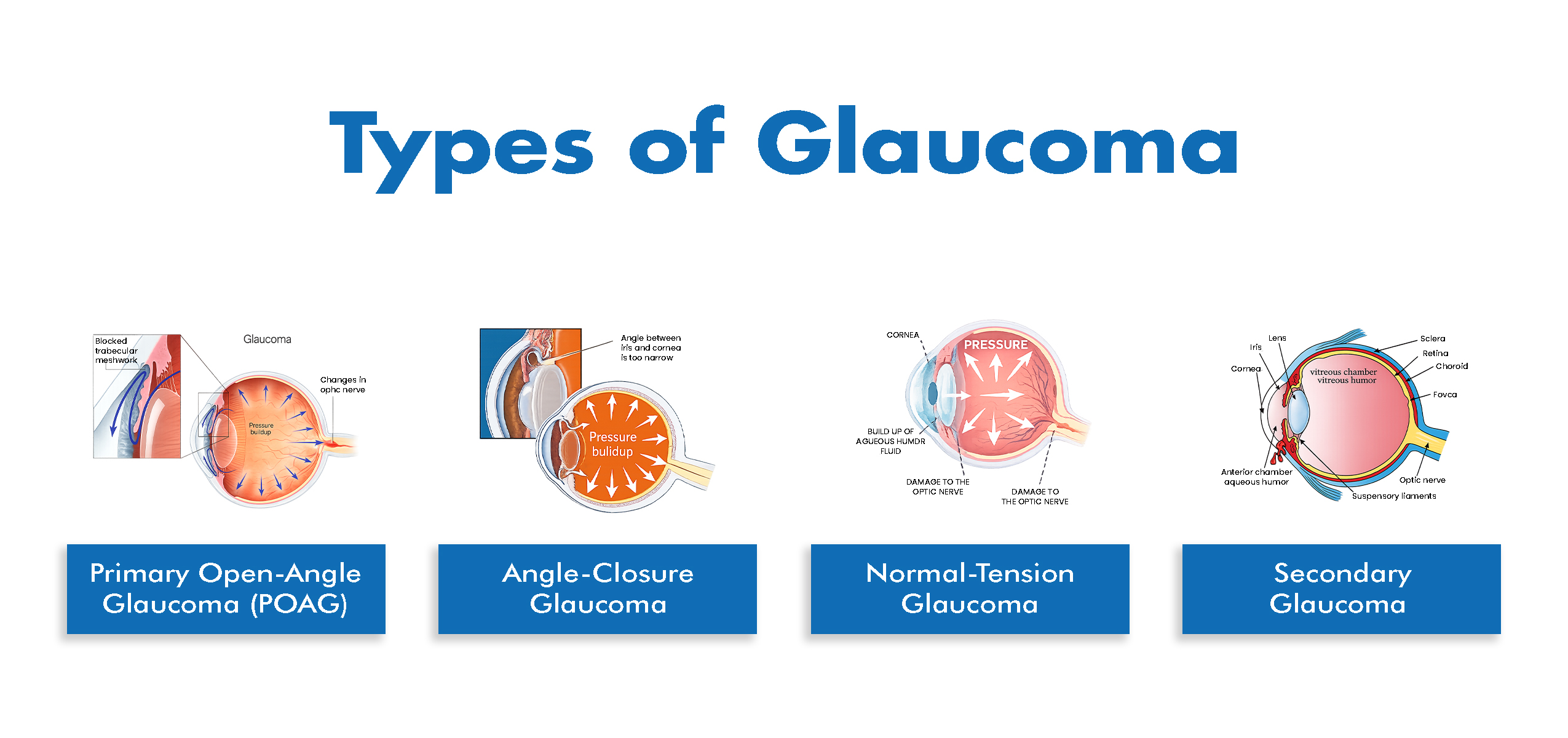
1️⃣ Primary Open-Angle Glaucoma (POAG)
The most common type. Fluid drains too slowly, raising pressure over time.
Symptoms: Often none until advanced stages.
2️⃣ Angle-Closure Glaucoma
Sudden blockage of fluid flow — a medical emergency.
Symptoms: Severe pain, redness, blurred vision, nausea, or halos around lights.
3️⃣ Normal-Tension Glaucoma
Optic nerve damage occurs even with normal eye pressure — cause still unknown.
4️⃣ Secondary Glaucoma
Results from injury, inflammation, diabetes, or long-term steroid use.
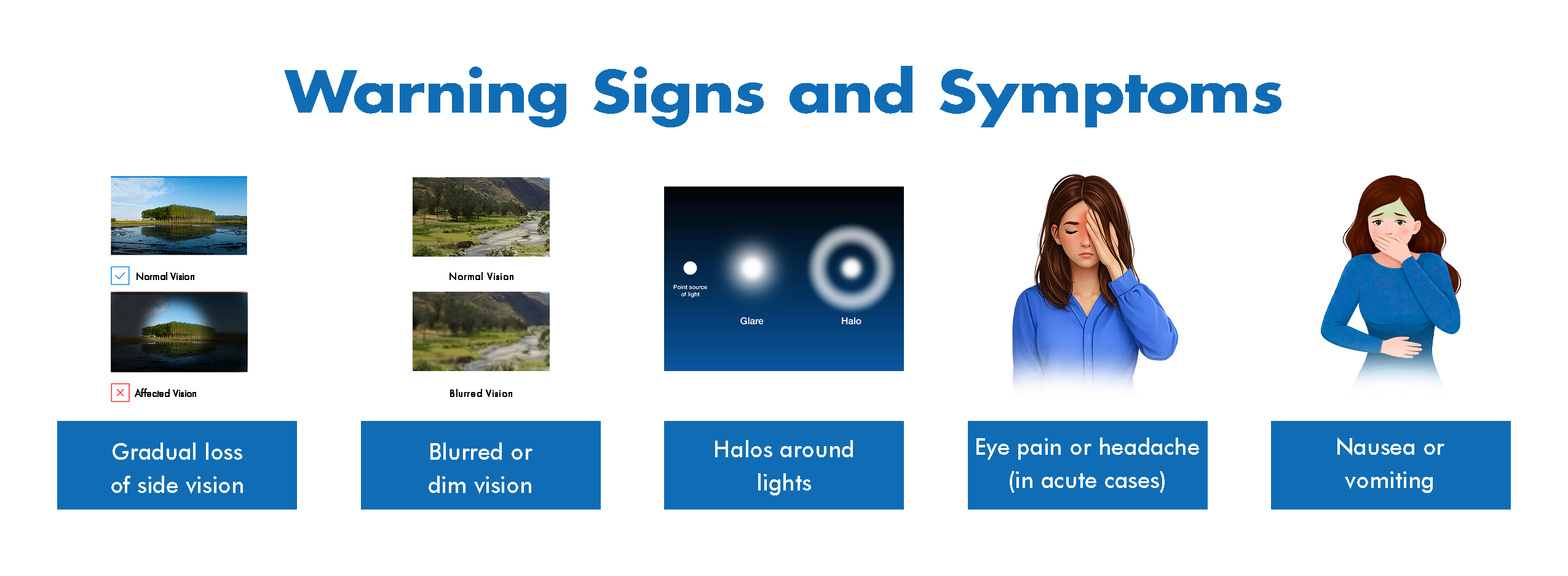
Warning Signs and Symptoms
Glaucoma often develops silently, but watch for:
👁️ Gradual loss of side vision
🌫️ Blurred or dim vision
💡 Halos around lights
⚡ Eye pain or headache (in acute cases)
🤢 Nausea or vomiting
If you’re over 40 year or have a family history of glaucoma, routine eye pressure checks are vital.
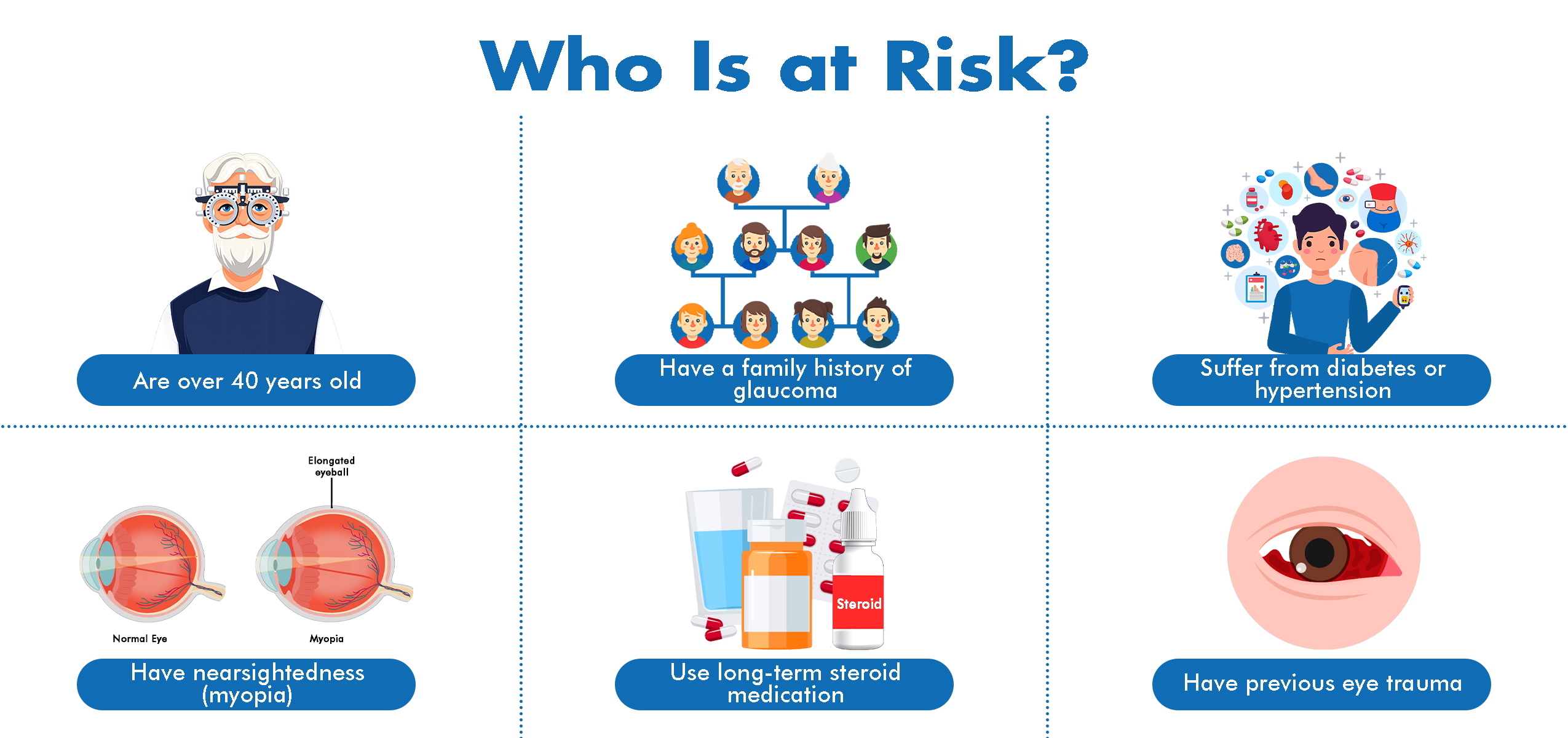
Who Is at Risk?
You may be at higher risk if you:
- Are over 40 years old
- Have a family history of glaucoma
- Suffer from diabetes or hypertension
- Have nearsightedness (myopia)
- Use long-term steroid medication
- Have previous eye trauma
Diagnosis and Early Detection
Glaucoma can’t be reversed — but early detection can save your sight.
At Drishti Eye Care System, we use:
🔹 Tonometry (eye pressure measurement)
🔹 Gonioscopy (angle assessment)
🔹 Visual field testing
🔹 Optical Coherence Tomography (OCT) for nerve imaging
These painless tests detect glaucoma before vision loss begins.
Treatment Options for Glaucoma
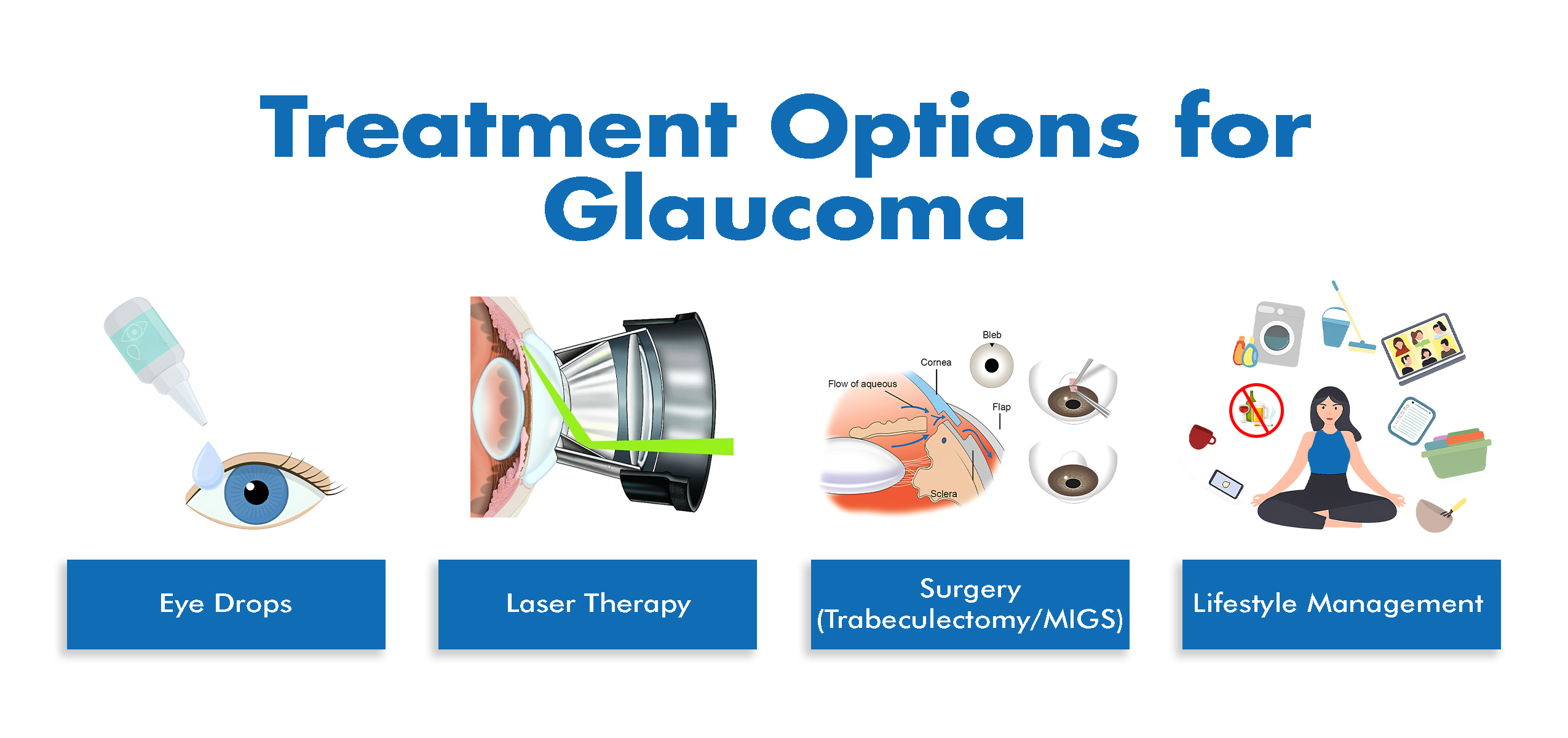
While there’s no cure, treatment can stop progression.
1️⃣ Eye Drops
Reduce fluid production, increase drainage or both together. Must be used regularly.
2️⃣ Laser Therapy
Helps open blocked channels or lower pressure (e.g., SLT, ALT).
3️⃣ Surgery (Trabeculectomy / MIGS)
Creates new drainage pathways for fluid to exit safely.
4️⃣ Lifestyle Management
- Regular eye exams
- Blood pressure & sugar control
- Avoiding stress, caffeine spikes, and smoking
Living with Glaucoma
Glaucoma is lifelong — but vision can be preserved with discipline and care.
Drishti’s glaucoma specialists offer personalized follow-up plans, medication guidance, and family screening programs.
Remember — glaucoma may be silent, but with awareness and action, you can stop it from stealing your sight.
Call to Action
Don’t let glaucoma steal your vision silently.
Visit Drishti Eye Care System for a complete Glaucoma Screening and Care Plan today.
📞 +977-9801445222 | 🌐 drishtieye.org
Drishti Eye Care System — Detect Early. Protect for Life.