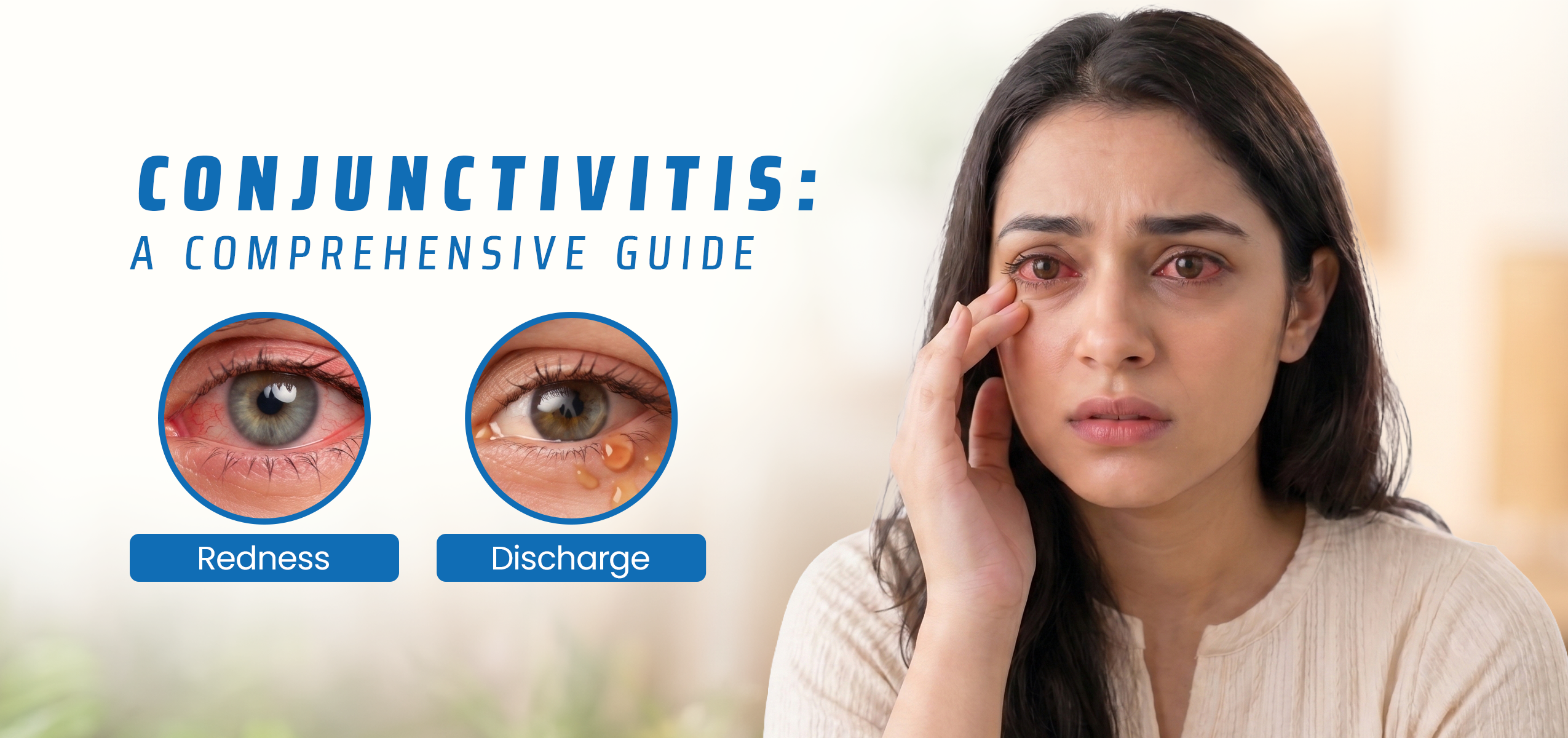
What is Conjunctivitis?
Conjunctivitis, also known as pink eye, is the inflammation or infection of the conjunctiva—the thin, transparent layer that lines the white part of the eye and the inner surface of the eyelids. It can affect one or both eyes and is highly common across all age groups.
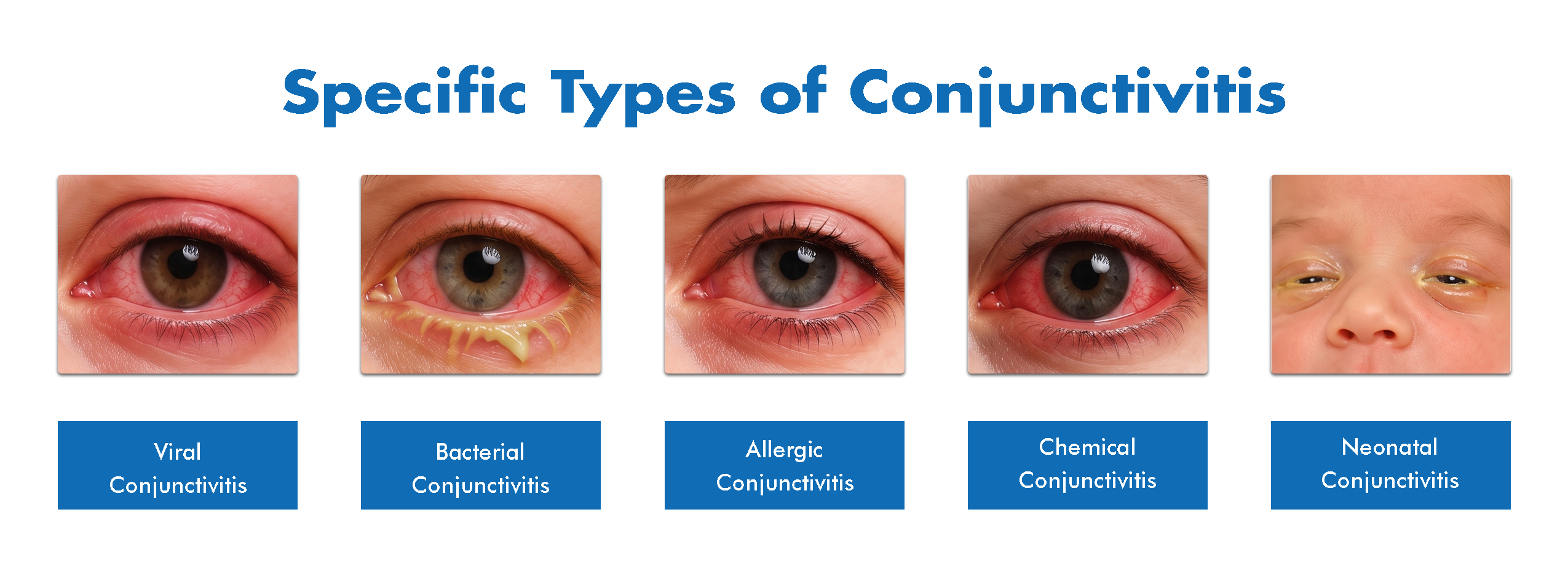
Specific Types of Conjunctivitis
- Viral Conjunctivitis
- Caused by viruses, such as adenovirus.
- Highly contagious and often associated with the common cold.
- Bacterial Conjunctivitis
- Results from bacteria like Staphylococcus aureus or Streptococcus pneumoniae.
- Often leads to thick discharge and is more common in children.
- Allergic Conjunctivitis
- Triggered by allergens such as pollen, dust, or pet dander.
- Not contagious and usually seasonal.
- Chemical Conjunctivitis
- Caused by exposure to irritants like smoke, chlorine, or cleaning products.
- Neonatal Conjunctivitis
- Occurs in newborns, often due to infections passed from the mother during childbirth.
Causes of Conjunctivitis
- Infections: Viral or bacterial pathogens.
- Allergies: Reaction to environmental allergens.
- Irritants: Chemical exposure or foreign particles.
- Poor Contact Lens Hygiene: Inappropriate hygiene or improper care-regimen procedures
- Autoimmune Diseases: Rare conditions causing inflammation.
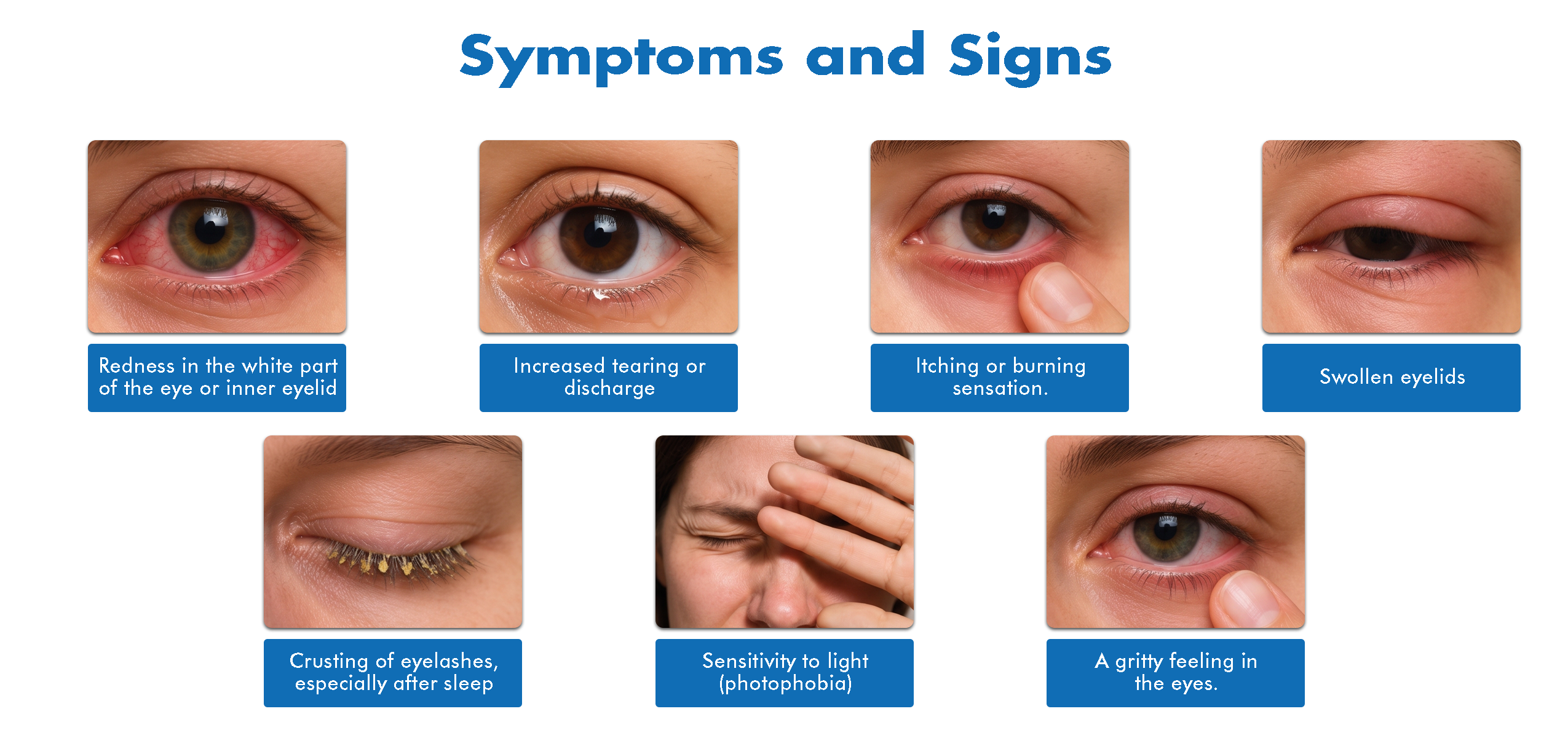
Symptoms and Signs
- Redness in the white part of the eye or inner eyelid.
- Increased tearing or discharge.
- Itching or burning sensation.
- Swollen eyelids.
- Crusting of eyelashes, especially after sleep.
- Sensitivity to light (photophobia).
- A gritty feeling in the eyes.
Types of Conjunctivitis
- Mild Cases
- Slight redness and irritation.
- Minimal discharge.
- Moderate Cases
- Noticeable redness and swelling.
- Thick discharge causing eyelid sticking.
- Severe Cases
- Intense redness, pain, and swelling.
- Vision disturbances or inability to open the eye fully.
Treatment
(Medications are only to be used after Doctor’s Prescription)
1. Viral Conjunctivitis:
- Self-limiting, usually resolves within 1–2 weeks.
- Apply cold compresses for relief.
- Use artificial tears to soothe irritation.
2. Bacterial Conjunctivitis:
- Antibiotic eye drops or ointments prescribed by a doctor.
- Maintain strict hygiene to prevent spreading.
3. Allergic Conjunctivitis:
- Avoid exposure to allergens.
- Use antihistamine or anti-inflammatory eye drops.
- Apply cold compresses to reduce itching and swelling.
4. Chemical Conjunctivitis:
- Immediately flush the eyes with clean water or saline for several minutes.
- Seek medical attention for severe exposure.
5. Neonatal Conjunctivitis:
- Requires prompt medical evaluation.
- Antibiotics or antiviral treatments as per the cause.
Prevention Tips for Conjunctivitis
Preventing conjunctivitis requires a combination of good personal hygiene, environmental precautions, and awareness. Below is a detailed guide to minimizing the risk of contracting or spreading conjunctivitis:
1. Maintain Proper Hand Hygiene
Frequent Handwashing: Wash your hands with soap and water for at least 20 seconds, especially after touching your face, handling personal items, or caring for someone with conjunctivitis.
Use Hand Sanitizer: When soap and water are unavailable, use an alcohol-based hand sanitizer containing at least 60% alcohol.
2. Avoid Touching Your Eyes
Hands Away from Face: Resist the urge to rub or touch your eyes, especially with unwashed hands, as this can introduce bacteria, viruses, or irritants.
Teach Children: Educate kids about the importance of not touching their eyes to reduce their risk.
3. Practice Good Contact Lens Hygiene
Clean and Disinfect: Clean your contact lenses regularly with appropriate solutions, and never reuse old solution.
Replace Lenses as Directed: Follow your eye care provider’s instructions regarding the replacement of daily, weekly, or monthly lenses.
Avoid Sleeping in Lenses: Unless prescribed, do not wear contact lenses overnight.
Avoid Water Contact: Do not wear contact lenses while swimming or in the shower to prevent exposure to waterborne contaminants.
4. Avoid Sharing Personal Items
Towels and Washcloths: Do not share towels, washcloths, or pillowcases with others. Use clean and separate items if someone in the household has conjunctivitis.
Cosmetics: Avoid sharing eye makeup, brushes, or applicators, as these can transmit infections. Replace old or expired makeup.
5. Minimize Allergen Exposure
Use Air Purifiers: If you suffer from allergic conjunctivitis, consider using air purifiers to reduce pollen, dust, and other airborne allergens.
Keep Windows Closed: During high pollen seasons, keep windows closed and use air conditioning if possible.
Wash Hands After Pet Interaction: For those allergic to pet dander, wash your hands thoroughly after handling animals.
6. Protect Your Eyes in Risky Environments
Wear Protective Eyewear: Use safety goggles or shields when working with chemicals, handling irritants, or performing activities that might expose the eyes to debris.
UV Protection: Wear sunglasses with UV protection to shield your eyes from harmful ultraviolet rays.
7. Keep Surroundings Clean
Disinfect Common Surfaces: Regularly clean and disinfect surfaces like doorknobs, light switches, and shared electronics.
Replace Bedding Regularly: Change pillowcases and sheets frequently, especially if someone in the household has conjunctivitis.
8. Manage Allergies Proactively
Medication: Use prescribed antihistamines or eye drops to reduce allergic reactions.
Stay Informed: Monitor pollen counts and avoid outdoor activities during peak times.
9. Seek Early Treatment for Symptoms
Prompt Action: Consult an eye care provider at the first sign of conjunctivitis to prevent worsening or spreading of the condition.
Follow Treatment Plans: Adhere strictly to prescribed medications and care instructions to ensure full recovery.
10. Avoid Self-Medication
Avoid Over-the-Counter Remedies: Refrain from using unverified home remedies or non-prescribed eye drops, as they can aggravate the condition.
Key Takeaway
Conjunctivitis is a common yet manageable eye condition. Understanding its causes, symptoms, and types is essential for timely treatment and prevention. Always prioritize hygiene and consult an eye care professional for accurate diagnosis and treatment.