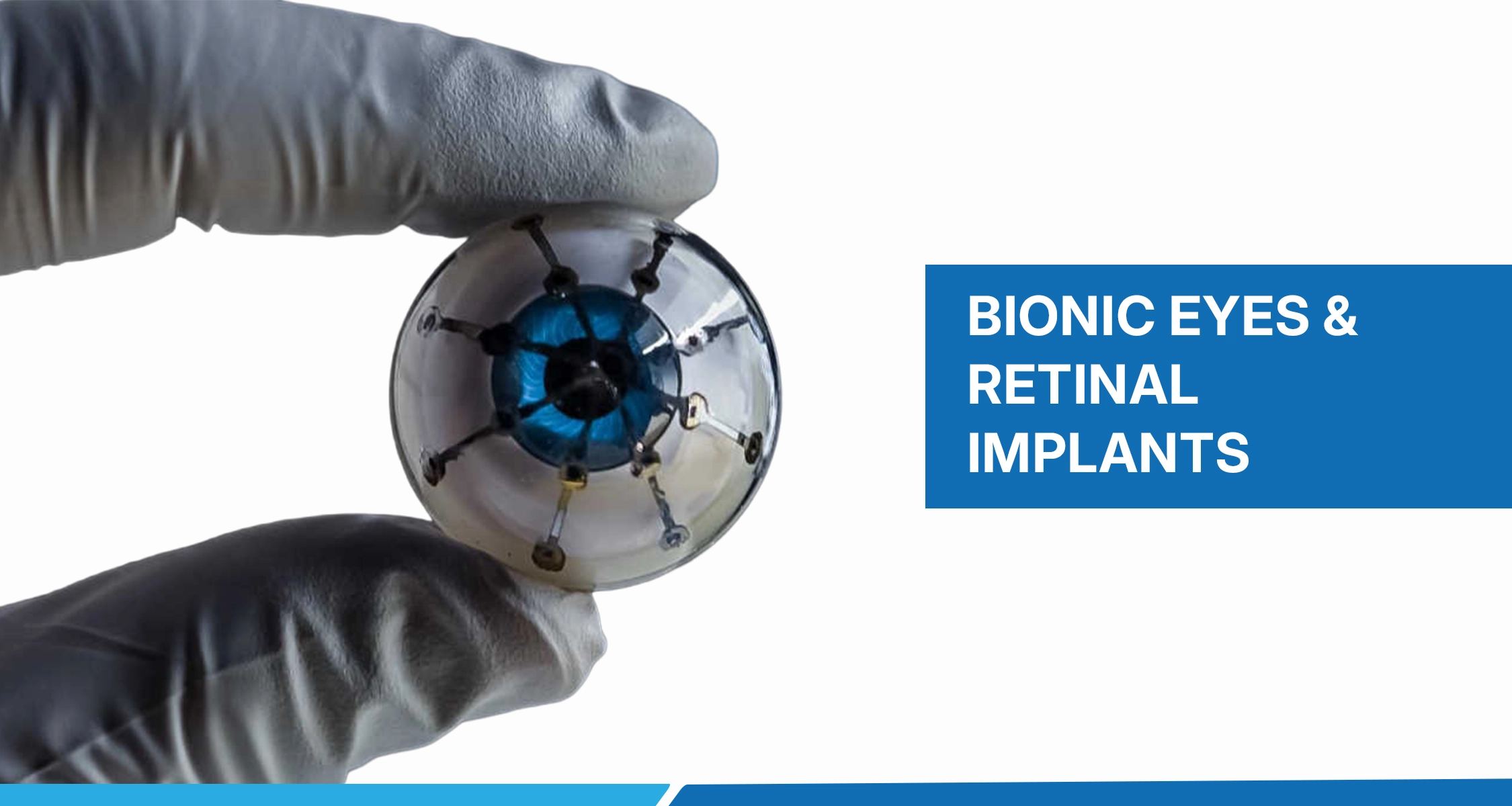
Bionic Eyes and Retinal Implants: Restoring Vision Through Advanced Technology
Introduction
Advances in medical technology are transforming the future of vision care. One of the most exciting developments is the emergence of bionic eyes and retinal implants—innovative devices designed to help restore a degree of vision for people with certain types of severe vision loss.
Although these technologies cannot fully restore normal eyesight, they offer hope to selected individuals with advanced retinal diseases by improving light perception, object recognition, and mobility.
At Drishti Eye Care System, we believe in educating patients about emerging eye care technologies while providing expert guidance on the latest treatment options for retinal diseases.
What Are Bionic Eyes?
A bionic eye is an electronic vision restoration system designed to help individuals with severe vision loss caused by certain retinal disorders.
Rather than replacing the entire eye, most current bionic eye systems work by stimulating the remaining healthy cells of the retina or the visual pathway using electrical signals.
The brain then interprets these signals as visual information.
What Are Retinal Implants?
A retinal implant is a small electronic device surgically placed inside or on the retina to provide artificial visual signals when natural photoreceptor cells no longer function properly.
Retinal implants are considered a type of visual prosthesis.
They aim to improve functional vision—not restore normal eyesight.
How Do Bionic Eyes Work?
Although different systems vary, most retinal implant technologies include:
1. A Miniature Camera
A tiny camera mounted on a pair of glasses captures images from the environment.
2. Video Processing Unit
The captured images are processed into simplified electrical signals.
3. Wireless Transmission
The processed signals are transmitted wirelessly to the implanted retinal device.
4. Retinal Implant
The implant stimulates surviving retinal cells using tiny electrical impulses.
5. Brain Interpretation
The optic nerve carries these signals to the brain, where they are interpreted as patterns of light and shapes.
Patients learn to interpret these visual patterns through rehabilitation and training.
Who May Benefit from Retinal Implants?
Retinal implants are currently intended for carefully selected patients with specific retinal diseases.
Potential candidates may include individuals with:
- Advanced Retinitis Pigmentosa (RP)
- Certain inherited retinal dystrophies
- Severe photoreceptor degeneration with preserved optic nerve function
Not everyone with blindness is a candidate.
Eligibility depends on:
- The underlying eye condition
- The health of the optic nerve
- The condition of the retina
- Overall medical health
- Comprehensive ophthalmic evaluation
What Can Patients Expect?
A retinal implant does not restore normal vision.
Instead, some patients may experience improvements such as:
- Detecting light and dark
- Recognizing large objects
- Identifying doorways or windows
- Improved mobility
- Better orientation in familiar environments
- Enhanced ability to distinguish movement
Results vary significantly from person to person.
Vision rehabilitation is an essential part of learning how to use the device effectively.
Current Limitations of Bionic Eyes
Although promising, retinal implants have several limitations.
These include:
- Limited visual resolution
- High cost
- Specialized surgical procedure
- Extensive rehabilitation required
- Not suitable for all causes of blindness
- Limited availability in specialized centers
Researchers continue working to improve image quality, implant longevity, and patient outcomes.
Emerging Technologies in Vision Restoration
Several exciting technologies are under investigation, including:
Gene Therapy
Designed to correct specific genetic defects responsible for inherited retinal diseases.
Stem Cell Therapy
Researchers are studying whether stem cells can replace damaged retinal cells.
Optogenetics
This approach aims to make surviving retinal cells responsive to light using genetic techniques.
Cortical Visual Prostheses
Instead of stimulating the retina, these devices directly stimulate the brain's visual cortex.
Artificial Intelligence (AI)
AI-assisted image processing may improve the quality and usefulness of visual information delivered by future retinal implants.
Many of these technologies remain in clinical trials or are approved only for specific conditions.
Risks of Retinal Implant Surgery
As with any surgical procedure, retinal implantation carries potential risks, including:
- Infection
- Bleeding
- Retinal detachment
- Device malfunction
- Inflammation
- Need for additional surgery
A thorough discussion with a retina specialist is essential before considering treatment.
Life After Retinal Implant Surgery
Successful rehabilitation plays a vital role in achieving the best possible outcomes.
Patients may work with specialists to learn:
- Orientation and mobility techniques
- Object recognition
- Visual training exercises
- Daily living skills
- Device maintenance and care
Progress is gradual, and expectations should remain realistic.
The Future of Bionic Vision
Researchers around the world continue to develop safer and more advanced technologies.
Future improvements may include:
- Higher-resolution implants
- Better wireless communication
- Smaller implant designs
- Enhanced AI-assisted image processing
- Improved visual outcomes
- Expanded treatment options for additional eye diseases
These innovations offer hope for individuals living with severe vision impairment.
How Drishti Eye Care System Can Help
At Drishti Eye Care System, we stay informed about the latest advances in retinal care and vision restoration.
Our services include:
- Comprehensive retinal examinations
- Diagnosis of inherited retinal diseases
- Optical Coherence Tomography (OCT)
- Retinal imaging
- Low vision rehabilitation guidance
- Genetic counseling referrals
- Personalized treatment planning
- Referral for advanced therapies when appropriate
Our experienced retina specialists are committed to helping patients explore the most suitable options for preserving and improving vision.
Call to Action
Innovations in retinal implants and vision restoration are opening new possibilities for individuals with severe retinal diseases.
If you or a loved one has advanced retinal disease, consult the specialists at Drishti Eye Care System to learn about current treatment options, ongoing advances, and personalized care.
📞 Call: +977-9801445222
🌐 Website: drishtieye.org
Drishti Eye Care System — Bringing Advanced Eye Care and Innovation Closer to You.